UTP Open Science Project: River Water Quality and Sustainability at Kuala Sungai Rui, Gerik, Perak
.png)
PROJECT BACKGROUND
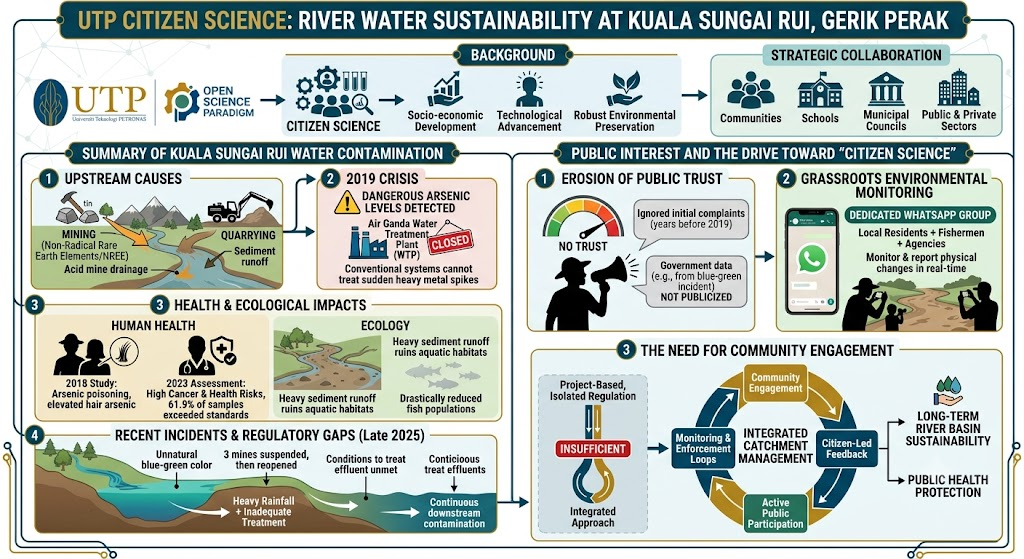
The water quality of Sungai Rui in Hulu Perak, Malaysia, has experienced severe degradation due to the cumulative physical and chemical impacts of upstream mining (including tin and Non-Radical Rare Earth Elements/NREE) and quarrying activities.
The 2019 Crisis: The issue gained national prominence in April 2019 when dangerous levels of arsenic—disturbed from geological formations via acid mine drainage—were detected in the raw water. This forced the immediate closure of the Air Ganda Water Treatment Plant (WTP) because conventional treatment systems cannot handle sudden spikes in dissolved heavy metals.
Health and Ecological Impacts: A 2018 study confirmed 18 cases of arsenicosis (arsenic poisoning) and elevated hair arsenic levels among local villagers. Furthermore, a 2023 health assessment revealed that 61.9% of water samples across 21 locations exceeded the National Drinking Water Quality Standard, presenting high cancer and health risks. Beyond chemical risks, heavy sediment runoff after rain blocks upstream tributaries, ruining aquatic habitats and drastically reducing fish populations for local fishermen.
Recent Incidents & Regulatory Gaps: In late 2025, parts of the downstream river visibly turned an unnatural blue-green. While agencies temporarily suspended three mining operations, they were permitted to reopen under conditions to treat their effluent. However, inadequate treatment, combined with heavy rainfall, has led to continuous, visible downstream contamination.
Public Interest and the Drive Toward "Citizen Science"
The ongoing situation at Sungai Rui has fostered a strong push toward community engagement, early warning tracking, and collaborative oversight core tenets of Citizen Science driven by the following factors:
Erosion of Public Trust: Local residents and fishermen reported visible river discoloration, heavy turbidity, and habitat loss years before the official 2019 shutdown, yet felt their initial complaints were largely ignored. Government data collected from mining effluents after the recent "blue-green" incident was not publicized, leaving the community in the dark regarding the safety of using the river. This lack of transparency has severely damaged public trust in formal regulatory oversight alone.
Grassroots Environmental Monitoring: Out of necessity, grassroots communication has already begun. A dedicated WhatsApp group combining local residents, fishermen, and relevant agencies is currently used to monitor and report physical changes to the river in real-time.
The Need for Community Engagement: The text concludes that project-based, isolated regulation by state agencies is insufficient. Moving forward, long-term river basin sustainability and public health protection will heavily rely on integrated catchment management that actively embeds community engagement and citizen-led feedback into enforcement and monitoring loops.