The deployment of carbon capture, utilisation and storage (CCUS) has gained momentum in recent years as one of the crucial technologies for capturing emissions that contribute to climate change before they enter the atmosphere.
Climate scientists say that CCUS deployment on a wide global scale is essential to achieving net-zero targets, and several organisations, including the Intergovernmental Panel on Climate Change (IPCC), the International Energy Agency (IEA) and the International Renewable Energy Agency (IRENA), have advocated for an effective acceleration of CCUS globally to reach climate targets.
“Achieving net-zero goals requires an energy transition. However, a complete energy transition is unlikely to happen in the near future, within the next quarter-century, while energy demand is expected to continue rising.”
“So CCUS technologies are needed during this transition period to reduce emissions from key sectors and industries and to remove carbon dioxide (CO2) to help balance emissions,” says Universiti Teknologi PETRONAS (UTP) Prof Ir Dr Lau Kok Keong.
CCUS technologies, he points out, are constantly evolving and have historically been associated with the oil and gas industry. However, as countries around the world seek to achieve their net zero goals, pressure is also mounting for hard-to-abate industries such as steel and cement production to decarbonise.
Citing the IEA, he says there are around 45 commercial facilities already operating with CCUS applications in industrial processes, fuel transformation and power generation, with over 700 projects in development across the global CCUS value chain.
CCUS involves the capture of CO2, generally from flue gas streams or at emissions sources such as power generation or industrial sectors like steel and cement. If not used on-site, the captured CO2 is compressed and transported by pipeline, ship, rail or truck to be used in a range of applications such as concrete, chemicals and synthetic fuels, or injected into deep geological formations such as depleted oil and gas wells or saline aquifers.
Lau is no stranger to these technologies, having worked on CO2 research at the university since 2011.
Over the past seven years, the university has expanded its research focus to include carbon utilisation and other types of hydrocarbons.
This reflects that its research isn’t restricted to CO2 but can also include methane, which has a global warming potential 28 times greater than CO2, he says, adding UTP’s expanded research focus enables it to build closer connections with industry.
In the area of carbon capture, UTP focuses on technologies involving absorption (solvent), membrane, gas hydrate, adsorption and cryogenic separation.
“Carbon utilisation, meanwhile, involves converting CO2 into value-added products, including fuels and chemicals. In the area of carbon transportation and storage, UTP has developed research capabilities that support the complete CCUS value chain,” he says, adding that this positions UTP as the only research entity serving the entire CCUS value chain.
Over the years, UTP has developed materials for carbon capture and utilisation for instance energy-efficient green solvent, highly selective membranes, multi-functional gas hydrate inhibitors and promoters, high-capacity adsorbents, high-performance catalyst for CO2 conversion, to name a few.
“We have also designed the process and scale-up requirements for carbon capture and utilisation technologies. Furthermore, our research nexus has also developed technologies to monitor carbon storage and carbon transportation,” he adds.
One-of-a-kind testing facility
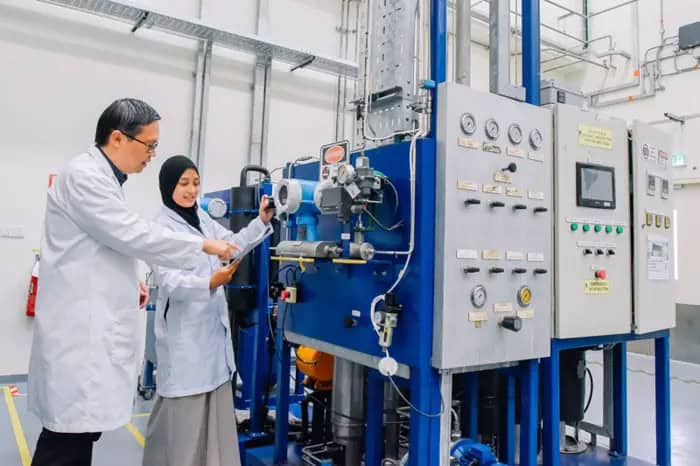
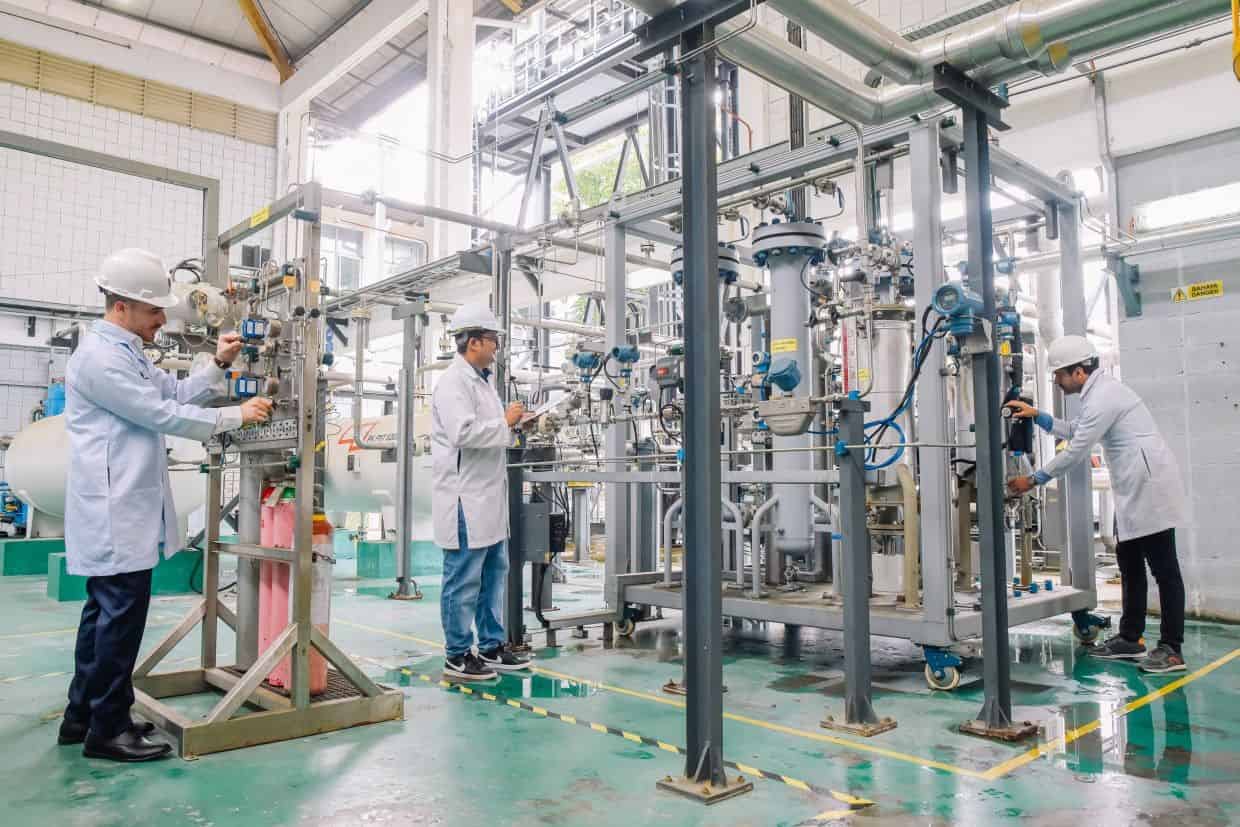
Through collaboration and support from PETRONAS, UTP has also developed an industrial-scale pilot testing facility for carbon capture technology, the first of its kind in Malaysia.
The facility, which was established in 2019, provides an opportunity for industry partners around the region to conduct pilot testing for their respective carbon capture technologies, an otherwise high-cost endeavour if they were to commission their own test facilities.
Apart from PETRONAS, industry collaborators and clients of UTP CCUS research – include multinational oil and gas companies in the region.
The outlook for CCUS research -, Lau says, is encouraging. “We are exploring various opportunities, including collaborations with universities in China, Thailand, Indonesia, UK, and South America. By looking at the entire CCUS value chain, our value proposition is very clear, so I believe the outlook will be very positive.”